If you have had a recent dental appointment and have been told that you need endodontic treatment, you definitely know the feeling of getting scared right away. The popular culture and TV shows have made everyone think about the particular dental treatment as a terrible experience for more than fifty years already. Even hearing the name makes some people want to run from the clinic immediately.
As a consequence, the most common question for all dentists and clinics is still the same – is root canal painful?
However, if you are postponing your visit to the clinic because you are afraid of experiencing pain, it is high time you stop worrying. The field of endodontics has changed greatly during the last twenty years. Visiting an advanced clinic due to the problem with your teeth now is not like it used to be. We will explain to you everything that takes place in the chair and debunk the old myths.
The Core Misunderstanding: Root Canal vs Tooth Pain
To get an idea of how this procedure feels like, we should discuss the reasons for which you need it at all. Here comes the first and most serious psychological misunderstanding experienced by the majority of patients – the difference between root canal vs tooth pain.
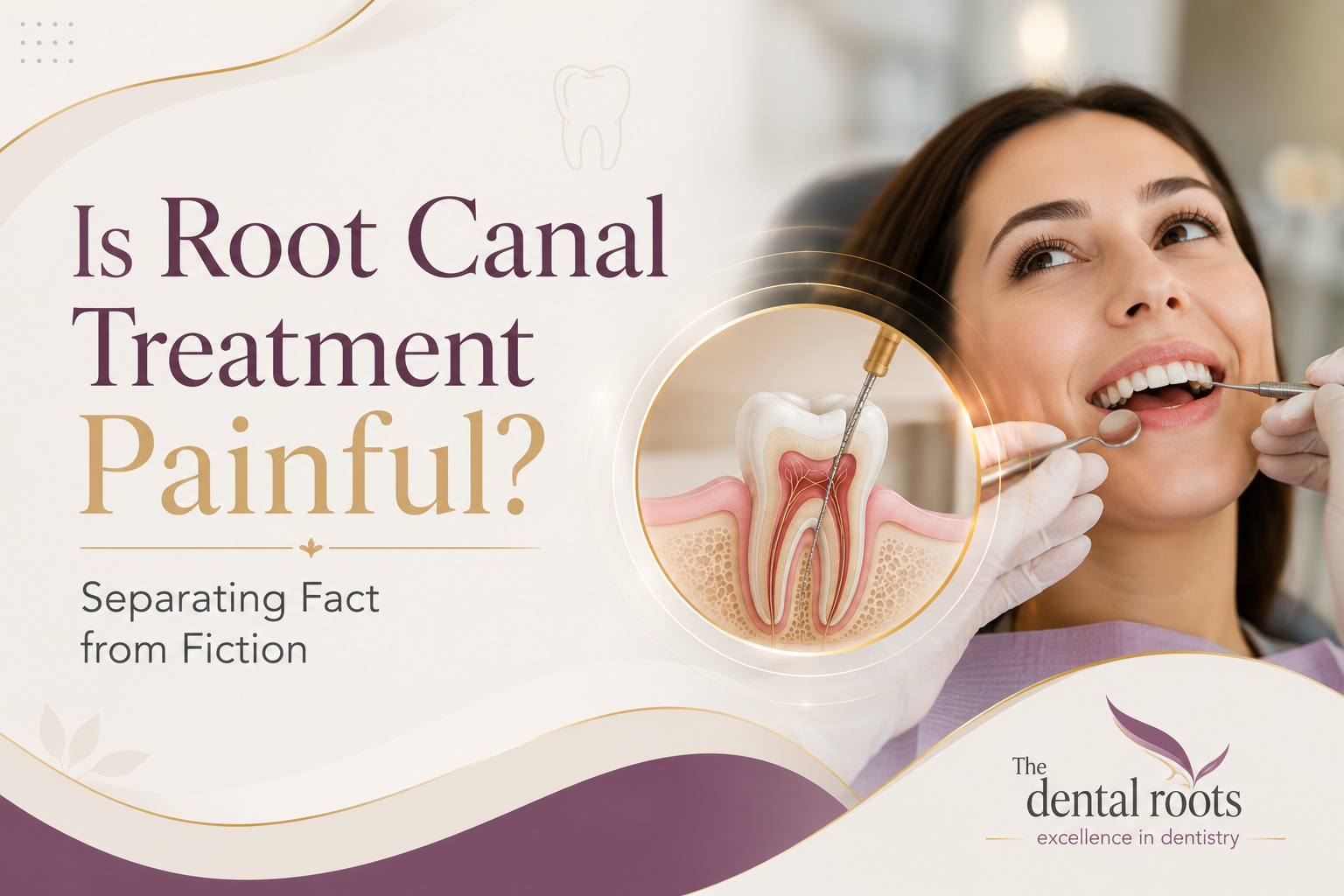
Inside the tooth, under the enamel and the second protective layer called dentin, there is a hollow chamber with soft tissues. These soft tissues are called the pulp of the tooth, and they include the most delicate and sensitive elements of a developing tooth such as nerves and blood vessels. In case the tooth suffers from a deep carious lesion, crack, or defective crown, and becomes exposed to the penetration of oral bacteria, the infection affects the soft pulp in the interior.
Since this inflammatory process takes place in a closed chamber surrounded by the tough dental bone, the pressure cannot escape anywhere but squeeze on the nerve endings inside. And this leads to excruciating pain.
The popular belief is that the procedure itself causes the pain. But actually, everything happens vice versa. The pain is caused by the infection, while the root canal procedure stops it.
During the Procedure: Does Root Canal Hurt?
Then, how does root canal actually take place? Do root canals hurt as the dentist is operating on your teeth?
The short and conclusive answer is no. Prior to any procedure being done, your endodontist will apply a very strong local anesthesia to your tooth and the tissues around it. Modern dental anesthesia is extremely potent and works very quickly. The dentist will numb the infected tooth, the gum tissue around it and even the jaw bone.
After that the tooth will be completely numbed. You will be conscious and able to see what is going on, but will not feel anything sharp. While the dentist opens up your tooth to remove the infection from it, you will most likely feel just a little bit of pressure and vibrations of the dental drill, but nothing more painful than that. The drill is just a tool for opening up the tooth to access its infected pulp.
In case if at any moment of the procedure you start feeling something unpleasant you just need to lift your hand and the dentist will stop and apply more anesthetic.
The Reality of the Root Canal Pain Level
In terms of the pain associated with the procedure during the consultation, most patients today equate the feeling to being treated for a regular cavity.
Indeed, in some of the best-equipped dental clinics that feature advanced facilities, it is such a painless procedure that many patients end up falling asleep in their chairs. After having the inflamed nerve tissues cleaned and extracted from the canals, your tooth will no longer feel any pain or changes in temperatures. In other words, that excruciating pain that you were experiencing before entering the clinic will cease to exist instantly. Thus, when wondering about whether RCT is a painful procedure, you can be sure that this procedure will be quite comfortable for you.
The Recovery Phase: Root Canal Pain After Treatment
Although the process itself is practically pain-free, it is essential that you set realistic expectations for the healing period. After the treatment, once the deep numbness caused by the local anesthesia wears off, you may feel a bit sore afterward.
Remember that the tissue around the root of your tooth, especially the little ligaments that keep your tooth firmly in place in the jawbone, were very inflamed due to the bacterial infection before your visit. In addition, the process of cleaning and reshaping the canals in your tooth may irritate these tissues temporarily.
The pain associated with the root canal after the treatment is normally a dull ache or slight tenderness that occurs when you chew or press on the tooth. The sensation is certainly not like the acute pain you had before the procedure.
Effective Pain Management at Home
It is very simple to take care of the discomfort following this slight recovery. All you have to do is take preventive measures to avoid any pain at all.
In general, over-the-counter anti-inflammatory drugs, including ibuprofen, will be more than enough for the minor swelling and soreness. The dentist will provide you with the exact dosages before you leave the dental office. Furthermore, it is highly advisable to chew your food from the other side of your mouth for several days so as not to cause any additional mechanical pressure on the recovering tooth.
The diet consisting of soft foods like yogurt, scrambled eggs, mashed potatoes, and smoothies will additionally avoid causing irritations. In a matter of several days, the ligaments will recover and stop being inflamed, and the tooth will return to its normal state.
Busting Common Root Canal Myths
It is now high time to put root canal myths behind us. Fear surrounding this procedure came to existence way back in the days, when there was no advanced technology in terms of anesthesia and microscopic drills as well as X-ray technology available.
Yet another popular myth is associated with pulling the infected tooth instead of cleaning it, as being a quicker, cheaper, and less painful option. This is a very risky approach to think about. Extraction of your tooth from your jaws would definitely cause more pain and stress for your gums than cleaning the inside part of it. What is more, extraction leaves an empty space which sooner or later will need to be filled by an expensive dental prosthesis or a dental bridge.
The Dental Roots Advantage: A New Standard of Care
In order to ensure a seamless experience, it is all about the expertise of the professional and the technology they use. With our premium clinics spread across New Delhi and Gurgaon, The Dental Roots has revolutionized the endodontic experience.
We take pride in being the only dental clinic in the Delhi NCR area to have an expert panel of more than five highly-qualified and experienced endodontists, under the guidance of our revered founder, Dr. Dheeraj Setia.
We don’t believe in old methods of multiple visits. Our endodontists employ high-tech microscopes, rotary endodontics, and laser sterilization technology. This helps us in isolating the infection, cleaning the micro-root canals, and then sealing the tooth, usually in just one session that takes 30 to 45 minutes. In doing so, not only do we save your precious time, but we also prevent the chance of any reinfection, while making the whole healing process comfortable for you.
You need not live with a dental problem anymore; nor should you be dictated by fear.. If you are experiencing the warning signs of an infected tooth, reach out to the compassionate experts at The Dental Roots. We will help you save your smile with the gentle, world-class care you deserve.
Frequently Asked Questions
The Dental Roots Editorial Team
Written by our panel of specialist dentists & patient educators