You have spent countless hours looking at your own teeth in the mirror, fantasizing about how your life would be completely transformed by the perfect, straight and pearly whites you always wanted. You have done your research, looked at amazing photos showing transformation, and know without a doubt that veneers are what you need. Yet, just before you go ahead and make that appointment, dental fear strikes.
The needle. The drill. That dreaded dentist chair.
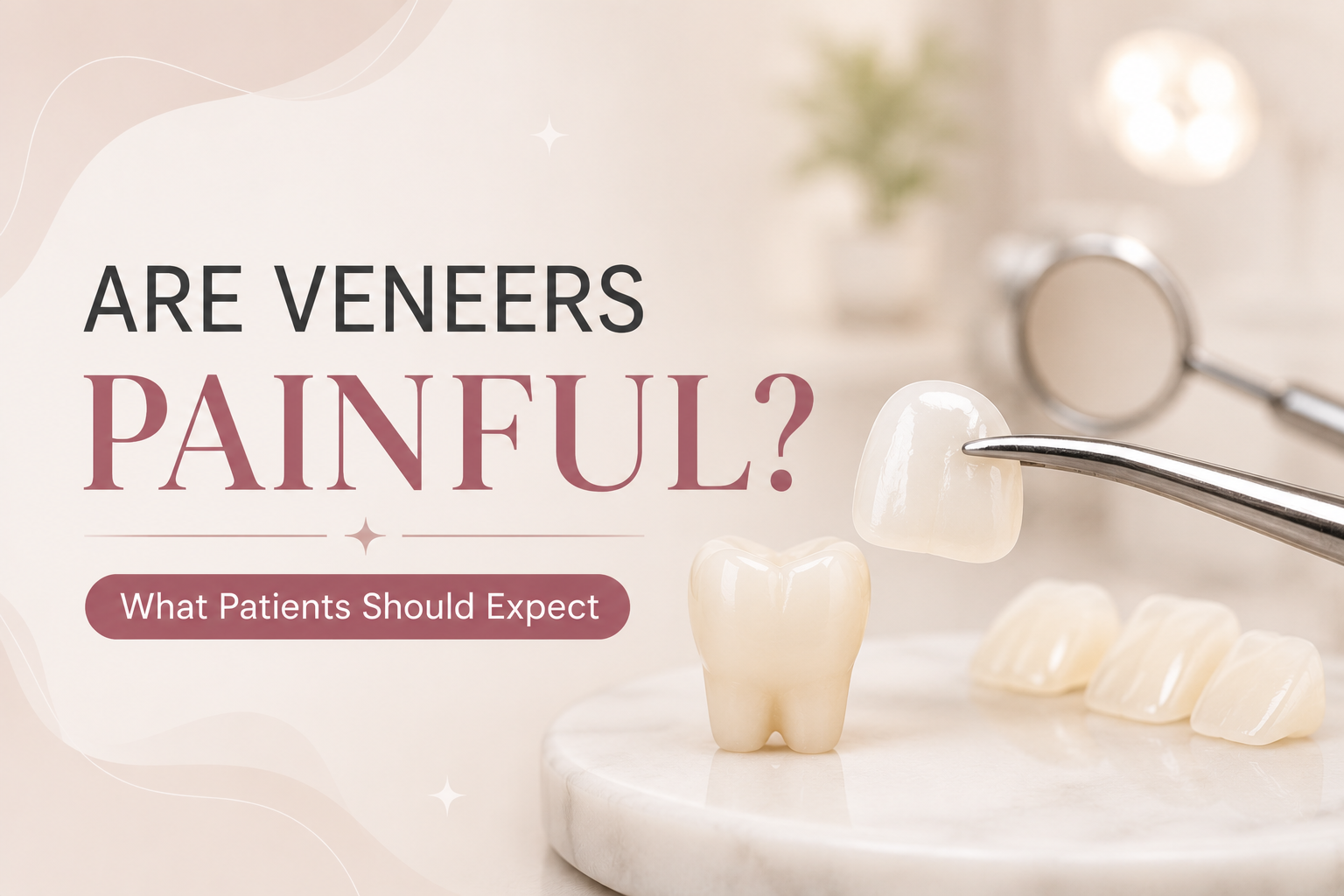
All of a sudden, the only thing your Google search results show is one very urgent question – are veneers painful?
It is totally understandable to be wary of any dental procedures, even more so when it is an elective cosmetic procedure. Who ever wants to put themselves through unnecessary pain? The sad thing is that there is an incredible amount of false information on the Internet about this procedure. If fear is the only thing preventing you from achieving the smile you deserve, it is time to clear the air. Let's get down to the bottom of how the process works, procedure-related pain and how to deal with the healing period.
The Fear vs. The Reality: Does Getting Veneers Hurt?
Here is the simplest answer for you: no, it’s not painful at all to get veneers.
Dental cosmetology has greatly changed since then. The procedures done nowadays are very accurate and minimally invasive. When a patient comes to our practice asking "Does getting veneers hurt?" we often say that getting veneers feels just like getting a regular dental filling done – only without the need of drilling the decayed tooth.
The fear before the treatment is often much bigger than the procedure itself. Since the procedure affects only the surface of your tooth, all the nerves within your tooth are absolutely untouched and safe. In order to know for sure why there is nothing to be afraid of, one needs to learn about the stages of the treatment.
What to Expect During Veneer Procedure: A Step-by-Step Breakdown
A standard smile makeover with porcelain veneers is typically split into two main clinical appointments: the preparation phase and the final placement phase. Here is exactly what happens during each visit and how your comfort is managed.
Appointment 1: The Preparation Phase
It is the visit which scares people the most, and it all is connected with tooth preparation for porcelain shells.
First of all, you will need to get local anesthesia in order to completely numb the area where your dentist will perform his work. It is this moment when you will have to feel the smallest pinch possible during the whole visit, and then your teeth and the gums around them will completely lose feeling. You will be awake and conscious during the treatment, but you will not feel any pain.
Afterwards, there comes the preparation of the teeth, and it is technically called enamel shaving. This term may sound quite scary, but the procedure itself is very careful and precise. The dentist will shave a microscopic layer off the front surface of the teeth (it is not much more than a half of millimeter). In other words, it is the size of the fingernail or eggshell. Why does it matter? Because it allows the veneers to look perfectly slim and thin. And because you are numb, you will only feel the vibration of the dental tool.
At the end of this visit, your dentist will place temporary acrylic veneers over your prepped teeth to protect them while a master ceramist crafts your permanent porcelain set.
Appointment 2: The Final Placement
In about one to two weeks, you will go back to the clinic. At this point, your dentist will carefully remove the temporary acrylics from your teeth. For some people, local anesthesia may be needed when removing the temporary acrylic because of sensitive teeth. However, for other people, there might be no need for anesthesia.
At this stage, your dentist will thoroughly clean your natural teeth and bond the porcelain veneers with a dental cement. The process will be done using a curing light that immediately hardens the cement. Polishing the margins is the last thing to be done to make sure that everything is smoothly fitted. Is it a painful procedure for getting the veneers? No, absolutely not.
The Aftermath: Managing Veneer Sensitivity After Treatment
As far as being in the dental chair goes, everything will be very comfortable; however, there are going to be a few minor annoyances in the days to come after your visit. There will be no pain experienced but there will be discomfort.
The first thing is that of tooth sensitivity. As the enamel coating of your teeth gets worn down in the process of preparing the teeth for the procedure, the underlying layer of the tooth becomes more exposed. The dentin is the part of the tooth where the nerve ends are located inside tiny tubules. Before your new veneers get set in their permanent position, the nerve will be a little hyperactive.
You will feel a short sharp stab in your teeth when you drink cold water, hot coffee or take in a deep breath of cold winter air. This tooth sensitivity from veneers is very common. It will become its peak while you have temporary veneers installed and subside in a matter of days up until a couple of weeks later.
How to Minimize Discomfort During Recovery
You do not have to just sit around and wait for the sensitivity to pass. There are several proactive steps you can take to make the transition phase incredibly comfortable:
Switch Your Toothpaste: Start using a desensitizing toothpaste (like Sensodyne) a week or two before your first appointment, and continue using it throughout the temporary phase. The active ingredients help calm the nerves inside your teeth.
Watch the Temperature: For the first week after preparation, avoid extremes. Skip the boiling hot teas and the ice-blended smoothies. Stick to room-temperature foods and beverages.
Over-the-Counter Relief: If your gums feel a little sore or irritated from the dental work, standard over-the-counter pain relievers like ibuprofen or acetaminophen are more than enough to manage the mild inflammation.
Salt Water Rinses: Rinsing your mouth gently with warm salt water two to three times a day can soothe irritated gum tissue and promote faster healing around the margins of your new teeth.
Why Your Choice of Dentist Matters
In terms of cosmetic dentistry, however, expertise and technology will determine whether you are going to be comfortable or not. The extent of removal of enamel, the accuracy of the provisional veneers used and the final bond will play a very big part in determining whether you will be comfortable after the procedure.
At The Dental Roots, known as a premier clinic for cosmetic dentistry in Delhi and Gurgaon, we always put the comfort of our patients at the very top of our list of priorities. We not only concentrate on providing our patients with great smiles but also make sure that the procedure is stress-free and painless. With the help of our extremely competent specialists and their advanced equipment, we can provide the most conservative tooth preparations possible, thus minimizing the post-op sensitivity and making the recovery process comfortable.
If you were postponing the smile makeover because of the fear of a dental chair, then now it is time to let this feeling go and transform your look. It is not as hard as you might think.
Frequently Asked Questions
The Dental Roots Editorial Team
Written by our panel of specialist dentists & patient educators