When a tooth is badly infected or damaged, your dentist will usually present two paths forward, and choosing between root canal treatment versus extraction can feel like a bigger decision than it needs to be. Both options solve the immediate problem of pain and infection, but they lead to very different long term outcomes for your mouth. This guide breaks down how the two procedures compare, what each one involves, and how to think through the decision with your dentist.
Understanding Root Canal Treatment vs Tooth Extraction
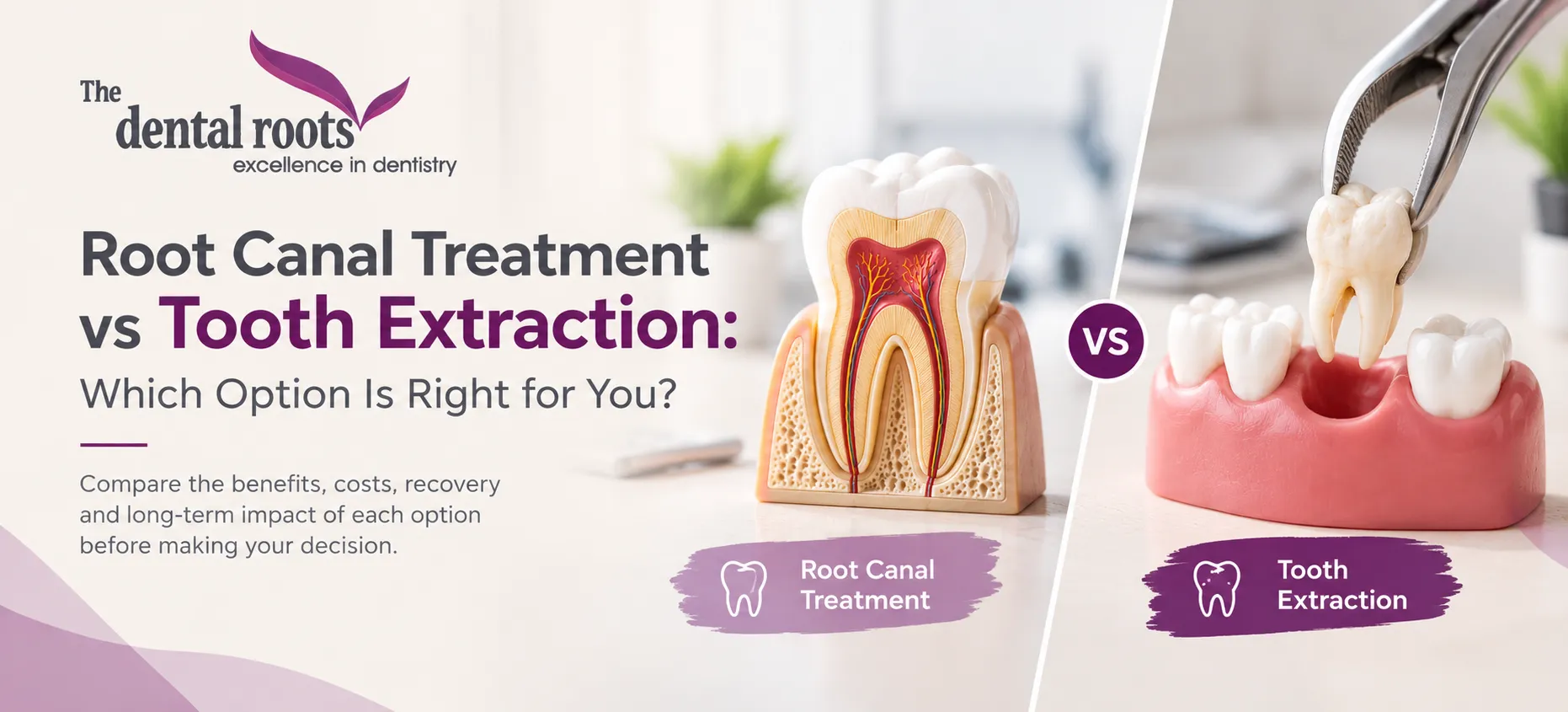
A root canal removes infected or damaged tissue from inside the tooth while keeping the natural tooth structure in place. Extraction, on the other hand, removes the entire tooth from its socket. Both are common, well established procedures used to treat an infected tooth or a severely damaged tooth, but they solve the problem in opposite ways, one preserves, the other removes.
The choice usually comes down to how much of the tooth can realistically be saved, the location of the tooth, your overall dental health, and your long term goals for your smile and bite function.
Root Canal vs Extraction: How Each Procedure Works
Understanding the mechanics of root canal vs extraction makes the decision easier to reason through.
A root canal involves removing the infected pulp from inside the tooth, cleaning and disinfecting the canals, then sealing them and typically capping the tooth with a crown for strength. The tooth's outer structure and root remain in your jaw, which means your bite and jaw bone stay largely undisturbed.
An extraction involves numbing the area, loosening the tooth from its socket, and removing it entirely. Depending on the tooth's position and condition, this can be a simple procedure or a slightly more involved surgical extraction. Afterward, the empty socket needs time to heal, and you will usually need to consider a replacement option to avoid shifting teeth and bite changes.
Can a Root Canal Save a Tooth That Looks Badly Damaged
A common question patients ask is can a root canal save a tooth that appears to be in rough shape. In many cases, yes. Even teeth with significant decay or a large infection can often be saved as long as enough healthy structure remains to support a filling or crown afterward. Dentists generally prefer to save a natural tooth whenever it is realistically possible, since natural tooth preservation tends to produce better long term outcomes for chewing function and jaw bone health than replacing the tooth.
That said, a root canal is not always viable. If the tooth is fractured below the gum line, has insufficient bone support, or the canal structure is too damaged to clean and seal effectively, extraction may be the more predictable option.
Should I Get a Root Canal or Extraction
If you are asking yourself should I get a root canal or extraction, a few factors typically guide the decision alongside your dentist's clinical judgment.
How much healthy tooth structure remains above and below the gum line.
Whether the tooth is a molar doing heavy chewing work or a less critical tooth.
The condition of the surrounding bone and gum tissue.
Your budget and timeline, since root canals plus a crown are often comparable in overall cost to extraction plus replacement, but the sequencing differs.
Your personal preference for keeping a natural tooth versus moving to a replacement option sooner.
There is rarely one universally right answer. A tooth that is a good candidate for one patient's lifestyle and budget might make more sense as an extraction for someone else facing different circumstances.
What Happens After Each Option
The path after treatment looks quite different depending on which route you take.
After a root canal, the tooth typically needs a crown to restore its strength, especially for back teeth that handle heavy chewing function. Once restored, a root canal treated tooth can function normally for many years, often for life, with routine dental care.
After a tooth extraction vs root canal decision lands on extraction, you are left with a gap that needs a plan. Left unaddressed, neighboring teeth can drift, your bite can shift, and bone in that area of the jaw begins to shrink over time since it no longer has a tooth root stimulating it. Replacement options generally fall into three categories.
A dental implant, which replaces the tooth root with a titanium post and a crown on top, and is widely considered the closest replacement to a natural tooth.
A dental bridge, which anchors a replacement tooth to the neighboring teeth.
A removable partial denture, a less permanent option that is generally more affordable upfront.
Root Canal vs Tooth Removal: Weighing the Long Term Picture
When people compare root canal vs tooth removal, cost is often the first thing on their mind, but it is worth zooming out to the bigger picture. A root canal followed by a dental crown keeps your natural tooth root in place, which continues to support the surrounding jaw bone the way it always has. Extraction, even when followed by a well placed implant, involves a period where the bone and gum tissue adjust to the missing tooth, and additional procedures like bone grafting are sometimes needed if too much time passes before replacement.
This does not mean extraction is a worse choice. For teeth that are too damaged to save, or where infection keeps recurring despite treatment, extraction followed by an implant or bridge can be the more reliable long term solution. The key is matching the option to the actual condition of the tooth rather than defaulting to one approach out of habit.
Questions Worth Asking Your Endodontist
Before deciding, it helps to ask your endodontist or general dentist a few direct questions. How likely is the root canal to succeed for this specific tooth. What would replacement cost and involve if extraction is chosen instead. Are there signs, like a vertical fracture or severe bone loss, that make one option clearly better suited here. A good specialist will walk you through the reasoning rather than simply recommending one path without explanation.
Conclusion
Choosing between root canal treatment versus extraction ultimately comes down to how much of the tooth can be saved and what outcome matters most to you, preserving your natural tooth or moving directly to a replacement. Root canals generally offer the advantage of keeping your own tooth and supporting jaw bone health, while extraction can be the more predictable choice when a tooth is too compromised to save. Neither option is inherently better in every situation. The right call depends on your specific tooth, your dentist's clinical assessment, and your own priorities around cost, timeline, and long-term dental health.
Schedule Your Consultation With Expert Dentists for Painless Root Canal Treatment At Dental Roots!
Frequently Asked Questions
The Dental Roots Editorial Team
Written by our panel of specialist dentists & patient educators