Let’s be completely honest for a minute here. If you have a terrible toothache while sitting in front of the TV at two in the morning and it hurts so much that you feel like your heart is beating in your teeth, you probably aren’t concerned about the future of your dental health at that moment. All you want to do is get rid of the pain immediately. For many people in such desperate situations, removing the affected tooth becomes an easy and quick way to solve the problem.
However, once you find yourself in the dentist's chair and face this difficult situation, the doctor gives you an option. He can remove the infection and save the tooth or simply extract it. Now, you have to make a huge decision in terms of your healthcare. You have to think about root canal treatment vs tooth extraction, and your choice will affect your oral cavity, your wallet and your smile for the rest of your life.
However, when you find yourself scrambling all over the Internet asking, "Should I extract or do a root canal on my tooth?" you must stop for a minute and step back from the situation. In truth, both of them are going to help relieve your discomfort, but they will lead you down totally different routes. Let's analyze the physical, economical, and biological aspects of each one to help you make your decision.
The Biological Gold Standard: Keeping What Is Yours
In terms of dentistry, there is absolutely nothing that comes close to the naturally given set of teeth that you were born with. Although modern medicine has invented numerous artificial tooth substitutes, none of them can match a biological tooth for their functionality, flexibility, and comfort. This is the reason why tooth preservation is almost always the main objective of any competent dentist.
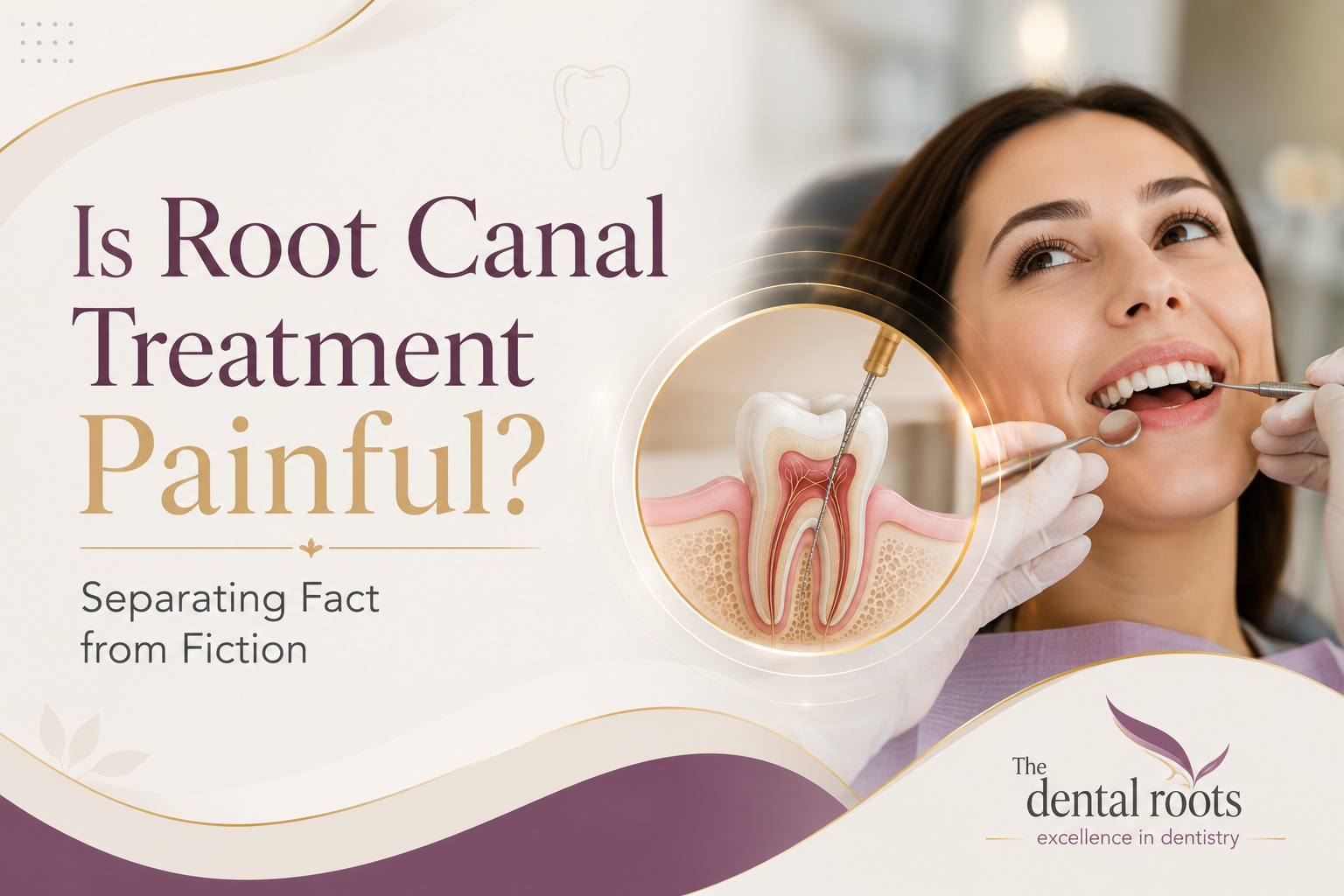
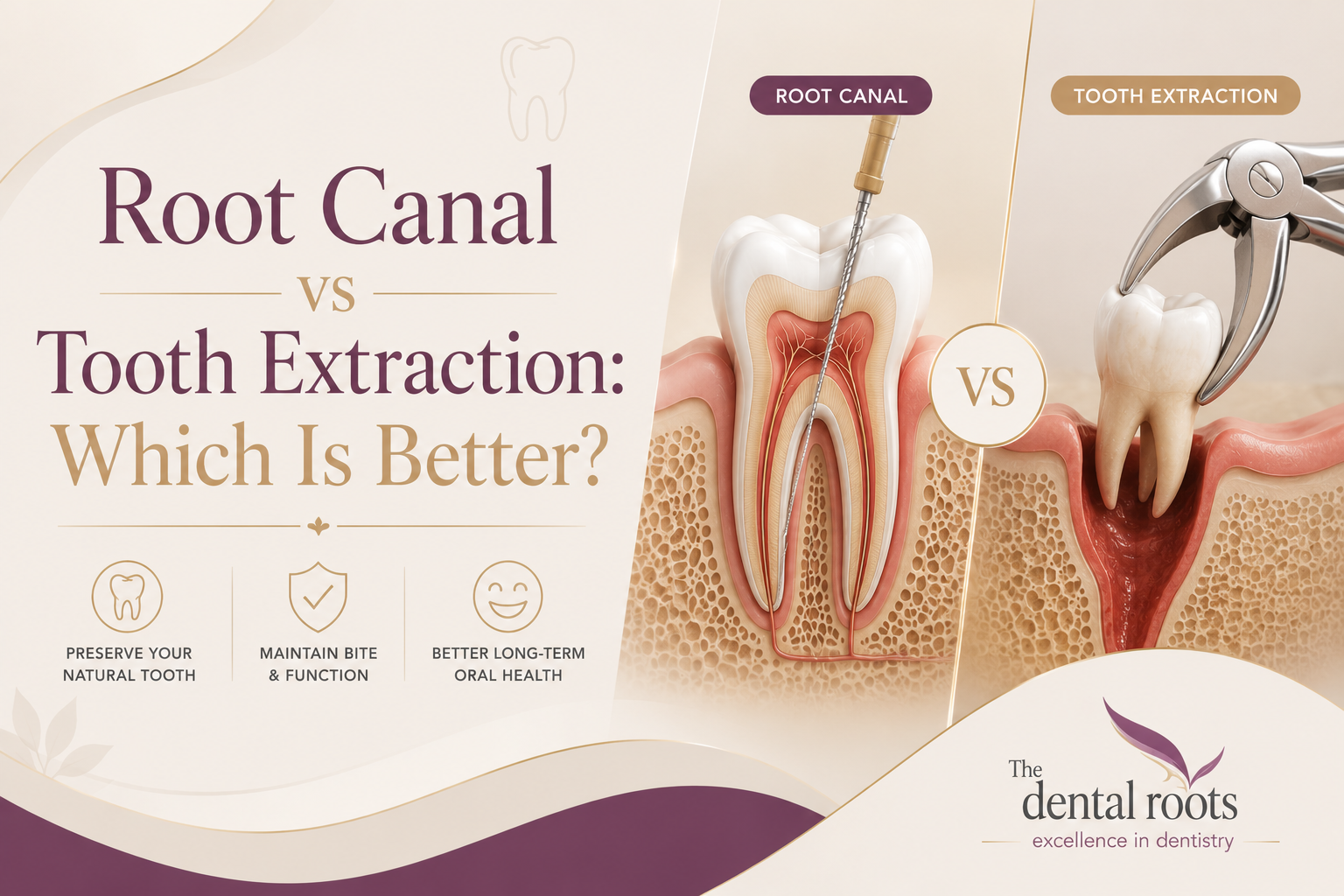
Once the tooth gets thoroughly infected, the pulp located in its core starts to die. It is the dead pulp that makes your pain unbearable. Root canal treatment is a kind of a rescue procedure. A dentist enters the tooth, eliminates all the affected parts, sterilizes the inner hollow space, and then closes it off. The root itself stays firmly rooted in the jawbone just where it should be.
As far as the question about the choice between saving the tooth and extracting it is concerned, it goes without saying that it is a huge advantage to preserve the root of the tooth. Since the root stays in its place, the bone receives the necessary physical stimuli from chewing. No need to learn to bite again.
After the dentist places a custom porcelain crown over the treated tooth, it looks and functions just like it did before the infection ever started.
The Alternative: Pulling the Plug
Exactly as the name suggests, an extraction process involves numbing the area before loosening the tooth by shaking it to dislodge its ligaments and remove it from your jaw.
Though the procedure of extracting the tooth will surely relieve you of your current infection and discomfort, it leaves a void in your body suddenly. It has been seen that the mouth is a very complex system, which has many interrelated parts. All the teeth depend upon each other for stability in much the same way that books depend on each other on the bookshelf. Now, imagine you take a book out from between others on the shelf, then the remaining books will tilt and come falling down.
The very same effect takes place in the case of the mouth as well. If you extract a tooth, then the adjacent teeth will move in and occupy the gap created because of the extracted tooth. Not only this, but even the opposing jaw's teeth will begin growing out of the gum line trying to pair up with their missing counterpart.
When to Choose Extraction Over Root Canal
This means that you should never extract a tooth then? Not necessarily. There are situations where a tooth has been affected beyond salvage.
The question of whether or not extraction should be performed can be answered from a point of structural health of the tooth. If for instance you bite on a hard piece of candy and crack your tooth in an upward manner from the biting surface to the root below the gum line, a root canal treatment cannot help much here since the tooth will now be literally split into two and needs to be extracted. In other situations, you have allowed your tooth to remain unattended to for such a long time that all there is left is the root with almost no solid tooth structure for attaching a crown. Again, advanced cases of periodontal (gum) diseases may cause the teeth to be very loose and may necessitate pulling. Otherwise, if there is a healthy root and enough enamel, extraction is normally not the ideal solution.
The Financial Illusion: Short-Term vs Long-Term Costs
This, in turn, brings us to the most popular rationale why people would rather extract their teeth – the cost factor. Taking purely economic considerations, tooth extraction versus root canal cost comparison shows absolute inequality. An extraction procedure is usually one of the cheapest procedures in the dental office. In case of a root canal, along with the cost of the porcelain crown needed, you should make a significant initial expenditure.
However, this is the moment when people start making a huge mistake from the financial point of view. They extract the tooth to save some money in the short term, without taking into account long-term costs comparison.
Since the gap will cause shifting of other teeth and even jawbone loss, you will have to fill it one day. Thus, you will need an artificial tooth replacement. The most efficient procedure for filling in gaps is the dental implant. It involves placing a titanium post surgically into your jawbone and crowning it with an artificial tooth. Another possibility is the dental bridge. You will need to grind two healthy neighboring teeth in order to put an artificial one between them.
Dental implants are one of the best pieces of technology, but their cost is significantly higher compared to that of a root canal procedure. Moreover, it takes several months to heal from such a treatment. Once you consider the expenses associated with the tooth extraction, additional bone grafting due to the removed tooth, and implantation, the extraction process turns out to be a much more costly one in the end.
The Hidden Impact on Your Facial Structure
There is yet another biological element that you should take into account concerning the future well-being of your teeth. When you decide on extracting one of your teeth but do not opt for getting an implant, your jawbone will respond to the absence of the tooth.
The jawbone requires physical stimulation in the form of chewing food in order to maintain its strength and volume. Due to the lack of stimulation provided by the tooth root, the body will believe that the bone is useless and start resorbing it. In the first year following the tooth extraction, you may lose up to 25 percent of bone mass in that area. As a result, your jawbone may change its structure and cause your cheeks to sag. Getting an implant will help you prevent that from happening.
The Final Verdict: Making the Right Choice
Therefore, when it comes to the question about whether root canal or extraction is better, there cannot be any doubt in the world of medicine. The answer is unequivocally in favor of saving the natural tooth by means of endodontic treatment due to all the benefits that it can bring to your health, facial structure, ability to chew and financial aspect in the future. Extraction must be considered as a real emergency only in the case of the total destruction of the tooth structure.
In any case, this process must not be hurried or complicated. At The Dental Roots, which is considered a top-notch dental clinic in New Delhi and Gurgaon, we try to provide our patients with full openness and clearness about everything. Coming to us in pain, our high-quality staff will examine the condition of your tooth using advanced 3D scanning.
We will provide you with a truthful and medically backed advice. Should the tooth be salvageable, our professionals will employ the latest techniques in laser sterilization and rotary instruments to make sure that your root canal procedure is fast, painless, and extremely effective. Should the tooth need to be extracted, we will assist you in going through a flawless process of getting replaced by a premium-quality dental implant.
Do not let the fleeting pain of toothache make you do something you will later regret. Get in touch with The Dental Roots now and let us help you keep your natural smile healthy and beautiful for years to come.
Frequently Asked Questions
The Dental Roots Editorial Team
Written by our panel of specialist dentists & patient educators