A lot of patients expect dental implant recovery to feel dramatic. Usually, it is not. The strange part about implant healing is that most of the important work happens quietly underneath the gums where patients cannot actually see it happening. The soreness improves fairly quickly, but the bone continues adapting around the implant for months afterward. That waiting period surprises people more than the surgery itself.
At The Dental Roots, one of the most common questions patients ask after implant placement is simple: “How do I know if healing is going normally?” The answer changes week by week because implant recovery happens gradually rather than all at once.
What to Expect After Dental Implant Surgery
The first thing most patients notice after surgery is not severe pain. It is usually mild swelling, tightness around the gums, tenderness while chewing, and slight difficulty eating normally. For straightforward single implant cases, recovery is often easier than patients expect beforehand. More extensive procedures like full mouth implants or bone grafting naturally involve a longer and heavier recovery process because larger areas are healing at once.
The important thing to remember is that the outside of the gums heals much faster than the bone underneath. That internal healing phase is what gives implants long-term stability later.
Dental Implant Pain After Procedure
This is usually the part patients worry about most. Not the surgery itself, but what happens later once the numbness wears off. The first evening after implant placement is usually more about soreness and swelling than severe pain.
Most patients experience mild throbbing, tenderness around the gums, slight swelling, tightness while chewing, and discomfort opening the mouth fully. The level of discomfort varies depending on number of implants placed, bone grafting requirement, surgical complexity, and individual healing response.
A single implant often heals more comfortably than patients expect. More extensive full mouth implant procedures naturally involve more recovery discomfort because larger areas are treated.
How Much Pain After Dental Implant Surgery Is Normal?
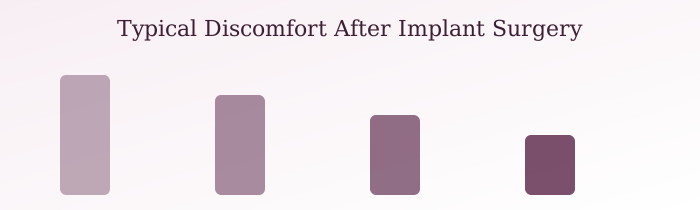
Most patients feel the strongest discomfort during the first two or three days. After that, things usually improve steadily. People often describe the recovery as more annoying than painful, similar to extraction soreness, and manageable with medication.
Soft food, ice packs, rest, and prescribed pain relief are usually enough for routine recovery. Pain that becomes worse several days later instead of improving is not considered normal and should be checked immediately.
Dental Implant Healing Time Week by Week
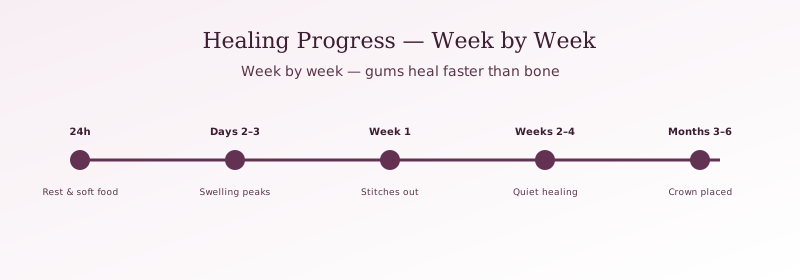
Recovery after implant placement does not happen in one straight line. Some days feel completely normal. Other days the area suddenly feels slightly sore again after chewing too much or eating harder foods. That variation is common during healing.
First 24 Hours After Implant Surgery
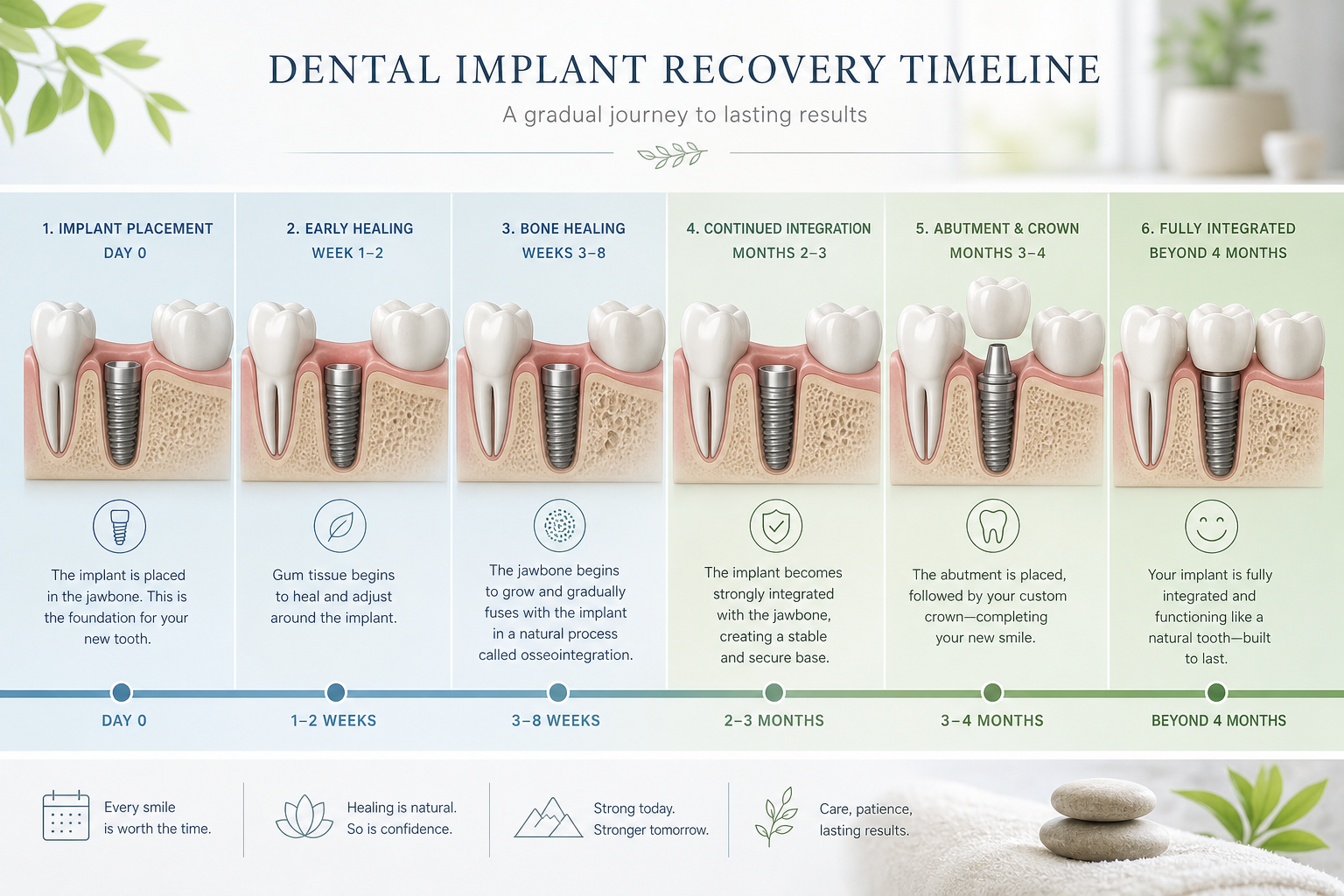
The first day is usually the most noticeable part of recovery. Patients commonly experience mild bleeding, swelling beginning around the gums, tenderness near the implant site, and numbness slowly wearing off.
Most dentists recommend resting properly, avoiding hot foods, eating soft food only, avoiding smoking completely, and using ice packs during the first several hours. People often expect major pain immediately after surgery. More commonly, the area feels sore, tight, or uncomfortable rather than intensely painful.
Days 2 to 3: Swelling Peaks
This is usually the phase patients like the least. Swelling often becomes more noticeable during the second day rather than the first. Some people also notice mild bruising, jaw stiffness, difficulty opening the mouth fully, and increased tenderness while chewing.
Soft foods become extremely important during this phase. Patients usually do best with yogurt, soup, rice, soft pasta, smoothies, and mashed foods. The goal is simply avoiding unnecessary pressure around the implant area while the tissues settle down.
Days 4 to 7: Things Usually Start Feeling Better
By this point, most patients begin noticing improvement. Swelling gradually starts reducing. The gums feel less irritated. Chewing becomes easier as long as people avoid hard foods directly on the implant side. Many patients return to office work, regular daily routines, and light physical activity during this stage. Some soreness is still completely normal.
People sometimes worry because the area “feels strange” even though the pain is improving. That feeling usually comes from the gums and tissues continuing to heal around the implant.
Suture Removal Timeline
If stitches were placed, they may either dissolve naturally or be removed after about one week. The exact timing depends on type of sutures used, surgical complexity, and healing response. Patients are often surprised by how normal the gums already begin looking externally by this stage. Internally, though, healing is still only beginning.
Weeks 2 to 4: The Quiet Healing Phase
This part feels deceptively normal. Most visible swelling has disappeared. The gums often look mostly healed. Patients usually stop thinking constantly about the implant because daily discomfort drops significantly.
Underneath the gums, however, the implant is still stabilizing inside the bone. This stage is important because osseointegration is actively happening now. The surrounding bone slowly begins locking around the titanium implant surface. Nothing dramatic happens from the patient’s perspective during this phase. Healing simply continues quietly in the background.
Soft Diet After Implant Surgery
One mistake patients sometimes make is returning to hard chewing too early because the gums no longer hurt. Pain reduction does not mean the implant is fully stabilized yet. For the first several weeks, dentists commonly recommend avoiding hard nuts, ice chewing, sticky foods, and crunchy snacks directly on the implant side. Soft food becomes less critical gradually, but protecting the implant during early healing remains important.
Months 2 to 3: Bone Integration Continues
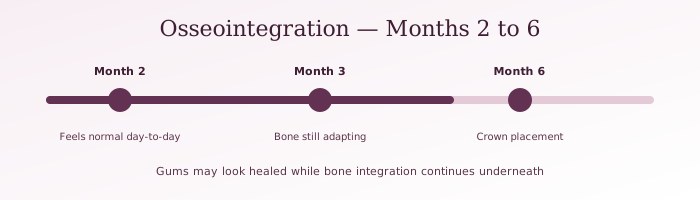
At this stage, most patients feel almost completely normal day to day. That creates a false sense that healing is fully complete. Actually, the bone is still adapting around the implant surface during this period. Osseointegration continues slowly underneath even when there is no visible soreness left. This stage matters enormously for long-term success. The stronger the bone integration becomes, the more stable the implant will feel years later during chewing.
Implant Loading Protocol
Not every implant receives a crown immediately. Some implants are left unloaded temporarily while healing happens underneath. Others may receive temporary crowns depending on implant stability, bone quality, bite pressure, and location in the mouth. This treatment timing is called the implant loading protocol.
Patients often hear phrases like immediate loading, delayed loading, or temporary restoration. The approach chosen depends on how stable the implant feels during placement and how safely chewing pressure can be managed during recovery.
Months 3 to 6: Final Healing and Crown Placement
For many patients, this is when treatment starts feeling truly complete. Once the implant becomes stable enough inside the jawbone, the final crown placement is done. The crown is matched carefully to nearby teeth in shape, color, and bite alignment. After the crown is attached, patients usually begin chewing much more normally again.
Most describe this stage as the point where the implant finally stops feeling like “dental treatment” and starts feeling like a regular tooth.
Signs That Your Dental Implant Is Healing Well
Patients often wonder whether healing is progressing normally. Common healthy signs include gradually improving soreness, reduced swelling over time, healthy-looking gums, no persistent bleeding, and stable implant without movement. Healing is usually slow but steady. The important thing is improvement over time rather than complete comfort immediately.
Normal Pain vs Warning Signs
Mild soreness and tenderness are expected early during recovery. Certain symptoms should not be ignored: increasing pain after several days, fever, significant swelling worsening suddenly, pus or discharge, implant mobility, or persistent bleeding. Most implant recoveries heal normally without major complications, but unusual symptoms should always be evaluated early.
How Long Does Dental Implant Recovery Take in Total?
This depends heavily on number of implants, bone quality, bone grafting requirement, healing response, smoking habits, and overall health. For many patients, gum healing improves within weeks, bone integration develops over several months, and full stabilization continues gradually afterward. The visible part of healing happens relatively quickly. The deeper healing inside the jawbone is what takes real patience.
Frequently Asked Questions
The Dental Roots Editorial Team
Written by our panel of specialist dentists & patient educators