Most people searching for dental implants vs dental bridge are not trying to become experts in dentistry. They are usually just trying to answer one question: “What is the better way to replace this missing tooth without creating bigger problems later?”
The confusion starts because both options seem similar at first. Both fill the gap. Both restore appearance. Both help with chewing. Then patients start hearing completely different opinions from different people. Someone says bridges are quicker. Someone else says implants last longer. One dentist talks about bone loss. Another talks about cost. Suddenly replacing one tooth starts sounding much more complicated than expected.
The truth is, both treatments can work well. The better option usually depends on what is happening around the missing tooth, not just the gap itself. At The Dental Roots, treatment planning for missing teeth focuses heavily on bone support, nearby tooth condition, bite pressure, and long-term stability instead of simply choosing the fastest solution.
Implant or Bridge for Missing Tooth
A lot of people leave a missing tooth untreated longer than they originally planned. At first, it does not feel urgent. They can still chew. The discomfort fades. Life becomes busy again. Then little things start changing slowly.
Food keeps getting trapped in the gap. The nearby teeth begin leaning slightly into the empty space. Some patients notice they chew only from one side, although they usually realize it much later. The longer the gap stays untreated, the more the surrounding area starts adapting around it.
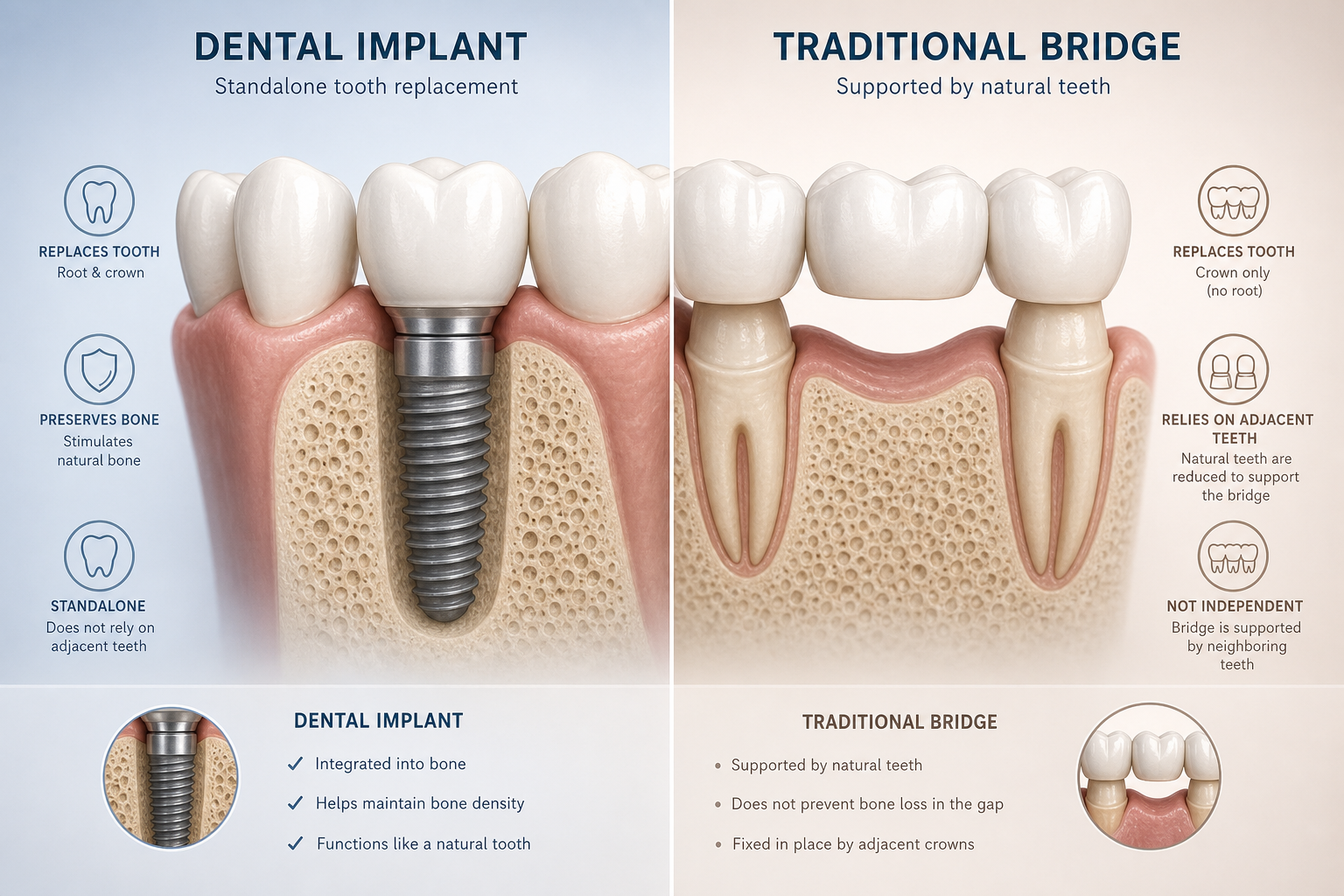
That is when dentists usually discuss either a fixed dental bridge or a single tooth implant. A bridge replaces the tooth by attaching an artificial tooth between crowns placed on the neighboring teeth. An implant works differently. A titanium implant post is placed directly inside the jawbone where the root originally existed. Once healing finishes, a crown is attached on top. That difference underneath the gums matters more than most patients initially realize.
What Patients Usually Pause At During Bridge Discussions
Many people walk into consultations assuming bridges will automatically be easier. And honestly, sometimes they are. Bridge treatment is usually faster. There is no implant surgery. Healing time is shorter.
Then patients hear one detail that changes the conversation. The neighboring teeth often need to be filed down so crowns can support the bridge. Some people are comfortable with that immediately, especially if those teeth already contain large fillings or old crowns. Others hesitate. They do not love the idea of reducing two healthy teeth just to replace one missing tooth. That hesitation is one reason implants became far more common over the years. Implants avoid involving the neighboring teeth altogether because they function independently inside the jawbone.
Tooth Implant vs Crown Bridge
Patients sometimes assume implants and bridges feel almost identical once treatment is complete. Usually, they do not. A bridge relies on neighboring teeth for support. An implant behaves more like an individual tooth because it sits directly inside the bone.
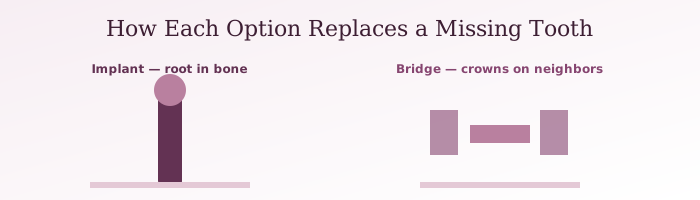
That difference changes how chewing pressure feels over time. Many implant patients describe chewing as feeling firmer and more natural because the pressure transfers directly into the jawbone instead of being shared across nearby teeth. Bridges can still function extremely well, especially when surrounding teeth already need crowns anyway. But structurally, the two approaches work very differently beneath the surface.
The Bone Loss Conversation Most Patients Never Hear Early Enough
One of the biggest differences between implants and bridges is something patients cannot actually see. It happens underneath the gums. Once a tooth root disappears, the jawbone in that area slowly begins shrinking because it no longer receives regular chewing stimulation.
That process is gradual. Most people do not notice it happening in the beginning. A bridge replaces the visible tooth above the gums, but it does not replace the root underneath. Because of that, bone beneath the missing tooth can continue shrinking quietly over the years.
Implants behave differently because they function more like artificial roots. Chewing pressure passes through the implant into the surrounding jawbone. Bone in that area tends to stay stronger because the implant behaves more like a natural tooth root.
Patients usually notice the effects of bone loss years later rather than immediately. Sometimes the gum contour changes slightly. Sometimes the area under a bridge begins looking flatter. Sometimes food trapping becomes more noticeable. The changes happen slowly enough that people rarely connect them to the original missing tooth.
Dental Implants vs Dental Bridge Cost India
This is usually the first comparison patients make. And realistically, it matters. Bridges often cost less in the beginning because they do not involve implant surgery, healing periods, titanium implant placement, or bone grafting procedures.
Implants usually involve a higher upfront investment because treatment includes surgery, digital scans, healing time, and implant components. But long-term cost becomes more complicated than the starting number alone.
Bridges rely on the neighboring teeth for support. If one supporting tooth develops decay, fracture, or gum problems later, the bridge may eventually need replacement too. Implants function independently, which changes long-term maintenance considerations.
Two patients replacing the exact same tooth can also receive very different estimates depending on bone condition, crown material, implant brand, gum health, bite pressure, and whether grafting is needed. That is why most clinics avoid giving exact implant or bridge pricing over the phone before proper examination and scans.
Bridgework vs Dental Implant Pros and Cons
There is no universal “best” option for everyone. Sometimes a bridge genuinely makes more sense. Other times implants clearly offer stronger long-term advantages.
Dental Bridge Advantages: Faster treatment process, lower upfront cost, no surgery involved, useful if neighboring teeth already need crowns.
Dental Bridge Limitations: Adjacent teeth usually require filing, bone beneath the gap may continue shrinking, supporting teeth carry additional pressure.
Dental Implant Advantages: Independent tooth replacement, helps preserve jawbone support, does not affect nearby healthy teeth, often provides stronger long-term stability.
Dental Implant Limitations: Higher starting cost, longer treatment timeline, healing period required after placement.
Most patients stop thinking in terms of “better vs worse” once they understand where each treatment works best.
Should I Get an Implant or a Bridge?
This depends heavily on what the surrounding teeth and bone look like. Healthy neighboring teeth often make implants more attractive because those teeth remain untouched. Teeth that already need crowns may make bridges more practical. Weak bone support may require grafting before implants are possible. Patients wanting faster treatment sometimes lean toward bridges. Lifestyle matters too. Some people want to avoid surgery completely. Others care more about preserving jawbone and avoiding future stress on neighboring teeth. That is why proper examination matters far more than generic online comparisons.
Which Looks More Natural?
Visually, both bridges and implants can look extremely natural when the work is done well. Most people would not notice the difference just by looking at someone’s smile. The bigger difference is usually functional rather than cosmetic. Implants tend to feel more like independent natural teeth because they emerge individually through the gums instead of connecting to neighboring crowns.
How Long Does a Dental Bridge Last Versus an Implant?
Both treatments can last many years with proper care. Longevity depends heavily on oral hygiene, smoking habits, gum health, teeth grinding, and bite pressure. Bridges depend on the health of neighboring supporting teeth. If one supporting tooth develops a problem later, the bridge may need replacement as well. Implants work independently, which is one reason they often perform well long term. The crown attached to an implant may eventually wear down over time, but the implant itself can remain stable for decades with good maintenance.
Fixed Dental Bridge vs Implant Comparison
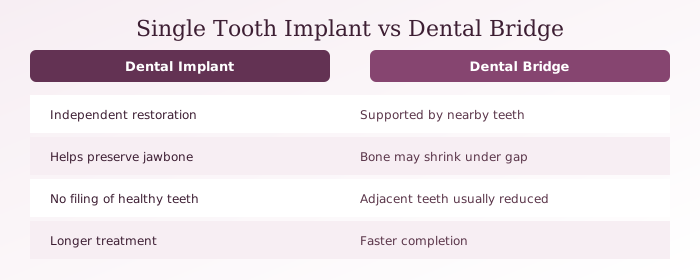
| Dental Implant | Dental Bridge |
|---|---|
| Independent restoration | Supported by nearby teeth |
| Helps maintain jawbone | Bone beneath gap may shrink |
| No filing of healthy teeth | Adjacent teeth usually reduced |
| Longer treatment process | Faster completion |
| Requires surgery | No implant surgery |
| Often lasts longer | May require replacement earlier |
Frequently Asked Questions
The Dental Roots Editorial Team
Written by our panel of specialist dentists & patient educators