Most people do not start researching dental implants vs dentures because they are excited about treatment. Usually, it happens after years of managing missing teeth. Someone gets used to chewing carefully. Another person stops eating certain foods without even realizing it. Dentures begin feeling loose during conversations. Smiling in public starts feeling different. Small adjustments become regular appointments.
At some point, people stop asking, “What is cheaper?” and start asking, “What will actually feel normal again?” That is where the implants versus dentures conversation becomes real. Both options replace missing teeth. But living with them day to day feels very different.
At The Dental Roots, patients often come in expecting a straightforward answer. The reality is more personal than that. The right option depends on chewing habits, bone support, comfort expectations, age, and how much stability someone wants long term.
Why Many Denture Wearers Eventually Consider Implants
Dentures usually work best in the beginning. Everything feels new at first, but manageable. Then small frustrations start showing up slowly over the years. Food gets trapped underneath more often. Lower dentures move while speaking. Some patients avoid restaurants because chewing becomes awkward in social settings. Others stop eating harder foods entirely because it no longer feels worth the effort.
A lot of people adapt quietly. They chew from one side. Cut food into smaller pieces. Avoid laughing too freely. That adjustment becomes normal after a while, which is why family members sometimes do not even realize how uncomfortable dentures have become for someone.
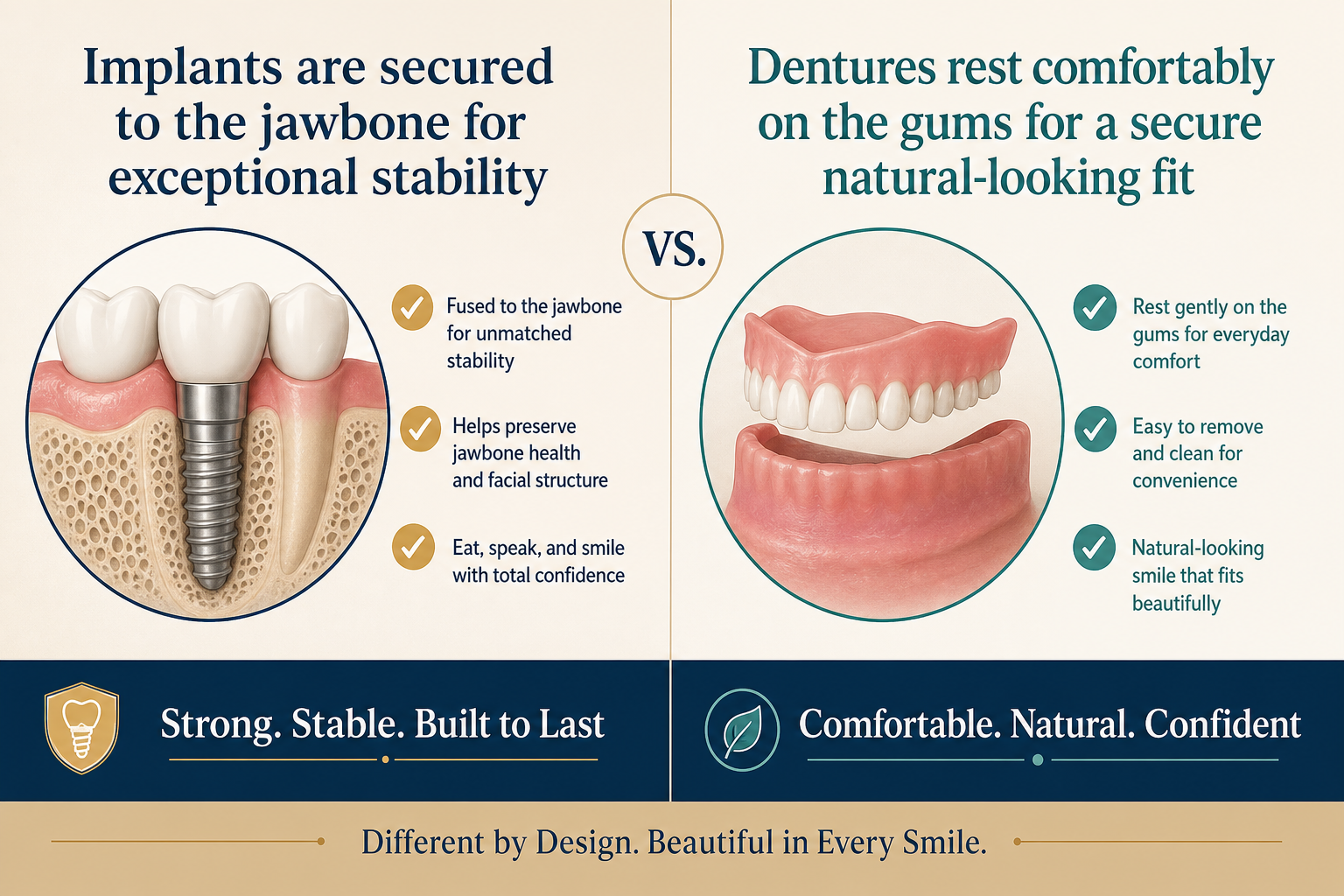
Implants change the experience because they stay fixed inside the jawbone instead of sitting loosely on top of the gums. For many patients, that stability becomes the biggest difference of all.
Permanent Teeth vs Removable Dentures
One thing patients say often after switching to implants is that removable dentures always felt temporary, even after years of wearing them. Not necessarily painful. Just never completely natural.
Dentures come out at night. They need cleaning separately. Some patients rely heavily on adhesives to keep them stable through the day. Implants feel different because they function more like actual teeth. The pressure from chewing transfers into the jawbone instead of pressing down onto the gums. Because of that, eating tends to feel firmer and more controlled.
Patients notice it most during ordinary things: biting into fruit, speaking for long periods, eating in public, and laughing without thinking about movement. People rarely think about their teeth when everything feels normal. That is usually the experience implant patients are hoping to get back.
The Part Most People Don’t Notice Until Years Later
The biggest difference between dentures and implants is not always visible immediately. It happens underneath the gums. After natural teeth are lost, the jawbone slowly begins shrinking because there are no longer tooth roots stimulating the bone during chewing.
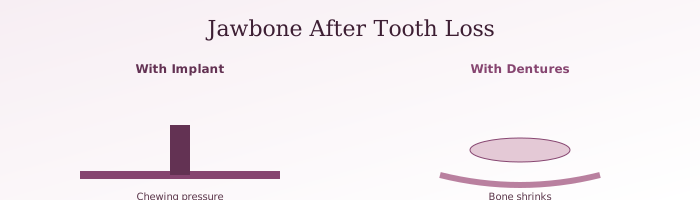
Dentures sit on top of the gums, so the bone underneath continues changing shape gradually over time. That is why older dentures often start feeling loose even after multiple adjustments. Patients sometimes assume the denture itself is the problem, but often the jawbone underneath has changed shape over the years.
Implants work differently because they act like artificial roots inside the jawbone. Chewing pressure passes through the implant into the bone, which helps maintain bone support more effectively long term. That does not mean implants stop every form of bone change completely, but they help reduce the shrinking that commonly happens after tooth loss.
Dental Implants vs Dentures Cost Comparison
This is usually the first question people ask. And honestly, it makes sense. Dentures cost less in the beginning. Implants cost more upfront because the treatment involves surgery, digital scans, healing time, and implant placement inside the jawbone.
But comparing the two gets more complicated over time. Dentures may eventually need relining, repairs, adhesives, replacement because of wear, and multiple fit adjustments. Patients often do not think about those ongoing changes initially because they happen gradually over years.
Implants involve a larger starting investment, but many patients choose them because they want long-term stability rather than repeated adjustments. The final implant cost also depends on number of implants, bone grafting requirements, type of prosthesis, implant brand, and jaw condition. That is why exact treatment pricing is usually given only after scans and examination.
The Difference People Usually Notice First
Most implant patients do not talk first about bone preservation or long-term dental science. They talk about eating. That tends to be the first major difference people notice after moving away from removable dentures. Food stops feeling unstable. Patients stop worrying about movement while chewing. Some eat foods they had quietly avoided for years.
There is also a confidence shift that happens socially. A lot of denture wearers become extremely skilled at hiding discomfort from other people. They smile carefully. Speak carefully. Eat carefully in public. Implants usually reduce that mental effort because the teeth feel more fixed and secure.
Implant-Supported Dentures: A Middle Ground
Not every patient wants fully fixed teeth immediately. Some people simply want their dentures to stop moving around. That is where implant-supported dentures become useful. Instead of depending only on suction, the denture connects onto implants placed inside the jawbone. The denture may still remain removable, but stability improves significantly.
This option is often recommended for loose lower dentures, moderate bone loss, patients wanting stronger chewing support, or patients looking for a lower-cost alternative to fully fixed teeth. For many long-term denture wearers, even this level of added stability feels dramatically different from traditional removable dentures.
Can I Switch from Dentures to Dental Implants Later?
Yes. A large number of implant patients wore dentures first. Some wore them comfortably for years before problems developed. Others became frustrated much sooner because of movement or chewing difficulty. The biggest factor dentists evaluate before switching to implants is bone support.
Long-term denture wear can sometimes reduce available jawbone significantly. In those situations, additional procedures like grafting may be needed before implants can be placed safely. Digital scans help evaluate bone thickness, nerve position, implant placement options, and whether grafting may be required. Even patients who were previously told they lacked bone may still qualify for treatment after proper evaluation.
Which Feels More Comfortable Long Term?
That answer depends heavily on what the patient expects from daily life. Some people remain perfectly comfortable with dentures and prefer avoiding surgery altogether. Others struggle constantly with movement while speaking, gum irritation, reduced chewing force, soreness, or feeling self-conscious socially.
Implants generally feel more stable because they remain fixed inside the jawbone. Patients who transition from dentures to implants often describe the change less as “getting new teeth” and more as no longer thinking about their teeth all day. That mental difference matters more than many people expect before treatment.
Dental Prosthetics Comparison
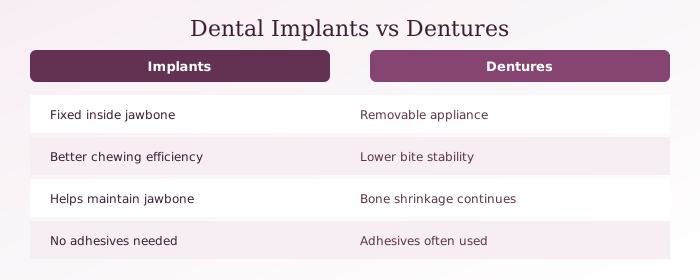
| Dental Implants | Dentures |
|---|---|
| Fixed inside jawbone | Removable appliance |
| Better chewing efficiency | Lower bite stability |
| Helps maintain jawbone | Bone shrinkage continues |
| Feels closer to natural teeth | May loosen gradually |
| No adhesives needed | Adhesives often used |
| Higher upfront investment | Lower starting cost |
Frequently Asked Questions
The Dental Roots Editorial Team
Written by our panel of specialist dentists & patient educators