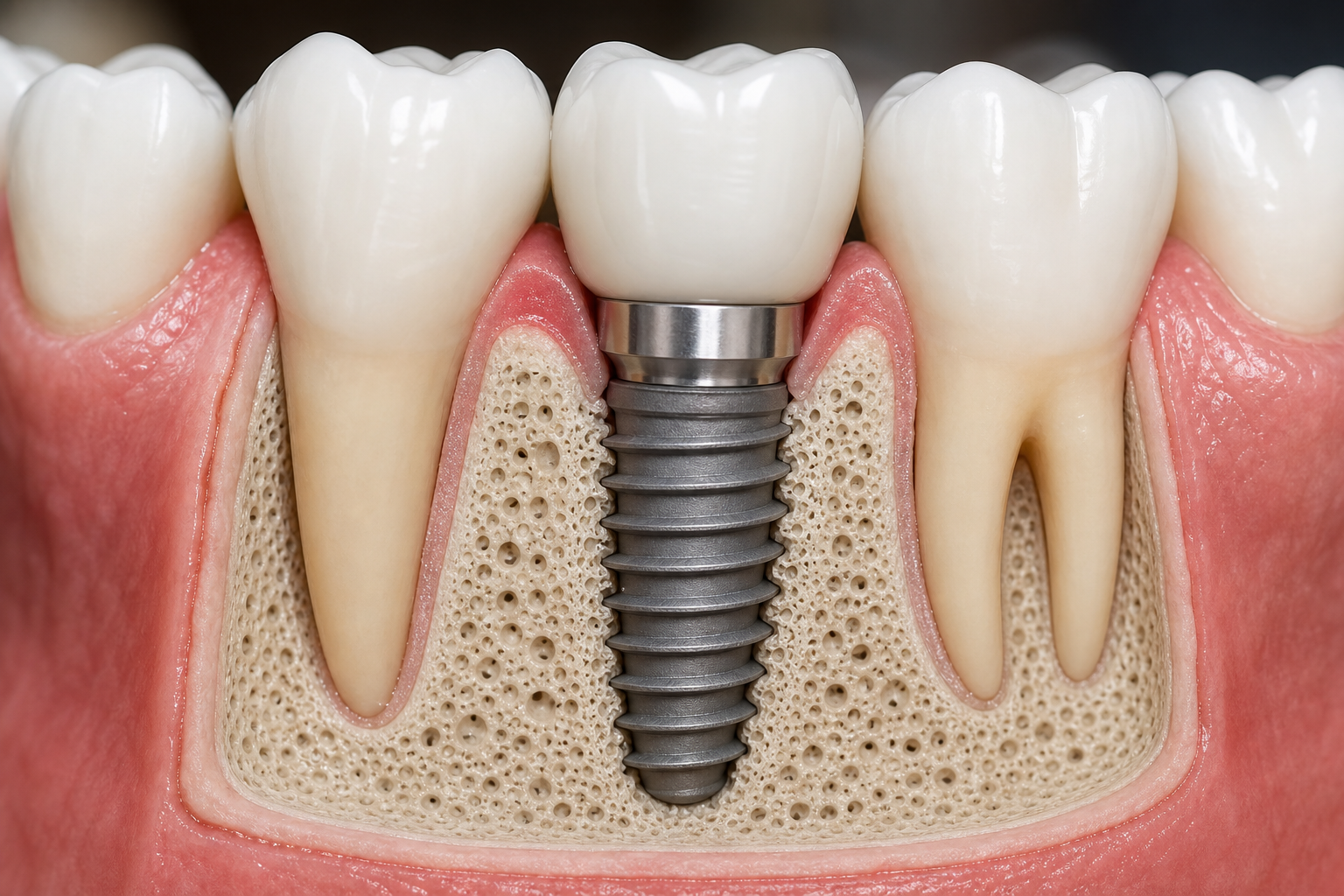
A single tooth dental implant is used to replace one missing tooth without depending on the surrounding teeth for support. The implant sits inside the jawbone like an artificial root, and after healing, a crown is attached on top to restore chewing function and appearance.
For many patients, the decision to get an implant starts as a cosmetic concern. Later, they realize the missing tooth was affecting much more than just their smile.
Tooth Implant for One Missing Tooth
A surprising number of people wait years before replacing one missing tooth. Not because they ignore it completely. Mostly because the gap stops bothering them after some time.
The pain disappears. Eating becomes manageable again. Daily life continues normally. Then small problems begin showing up gradually.
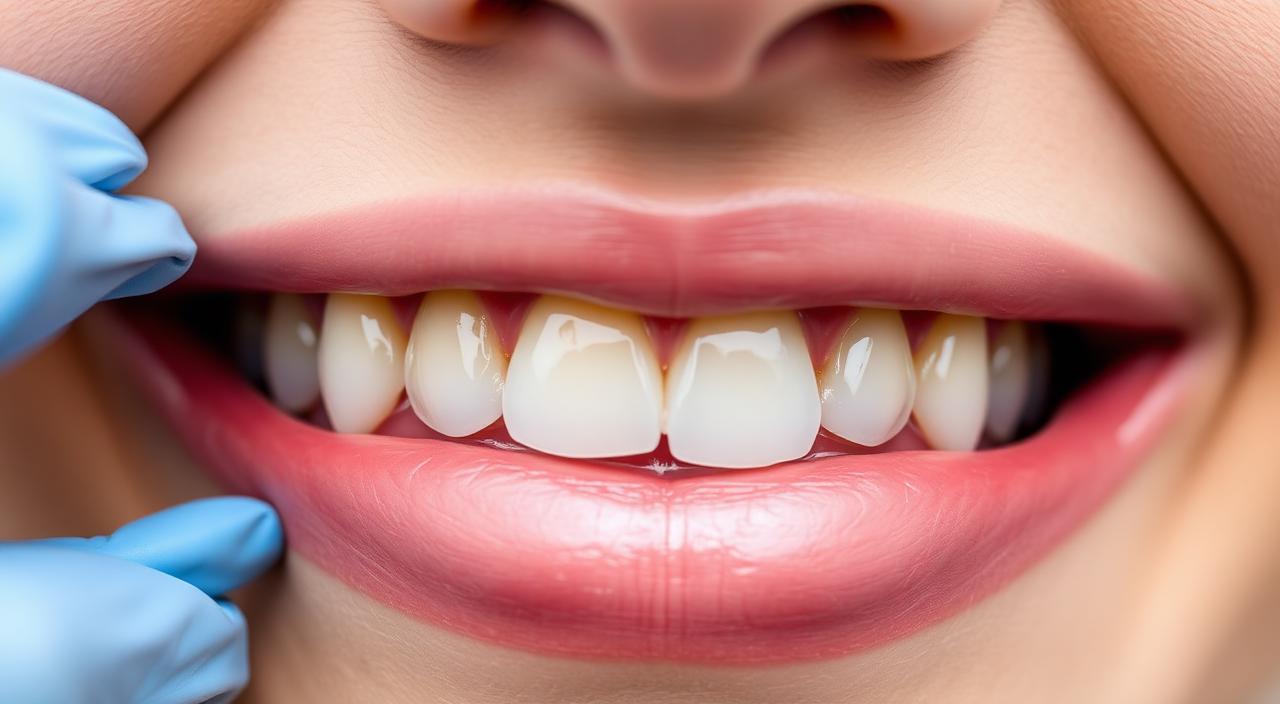
Food starts getting stuck in that space almost every day. Nearby teeth slowly drift toward the gap. Some people realize they chew only on one side without noticing when that habit started. Front tooth gaps affect people differently. Smiling becomes more controlled. Photographs become awkward. Some patients even cover their mouth while talking.
The bigger problem usually stays hidden underneath the gums. Bone in that area slowly begins shrinking once the natural tooth root is gone. The jawbone no longer receives chewing pressure there, so the body gradually stops maintaining that bone.
That is one reason dentists often recommend a single tooth dental implant instead of leaving the space untreated. The implant replaces the root as well, not just the visible tooth.
Single Implant Surgery Procedure
Most patients walk into implant consultations expecting something much more serious than what actually happens. The word “surgery” makes people imagine severe pain, major swelling, or a difficult recovery. Most single implant procedures are far less dramatic than that.
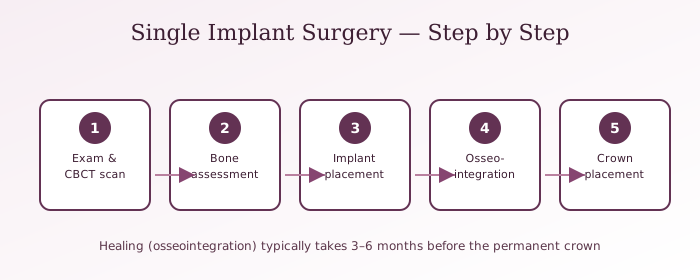
The process usually starts with:
- Dental examination
- X-rays or CBCT scans
- Bone assessment
- Treatment planning
The scans help the dentist evaluate bone thickness, nerve position, and whether there is enough support for the implant.
During surgery, local anesthesia keeps the area numb. Patients usually feel pressure, movement, and vibration during the procedure rather than pain itself.
The dentist places a titanium implant post inside the jawbone through a small opening in the gums. Once it is positioned properly, the gums are closed and the healing phase begins.
That healing stage matters more than the surgery itself. Over the next few months, the surrounding bone slowly bonds around the implant surface through a process called osseointegration. The implant essentially becomes locked into the jawbone over time.
Nothing exciting happens during this stage from the outside. The implant simply heals quietly under the gums while the bone adapts around it. Once healing is complete, implant crown placement is done to restore the visible part of the tooth.
What Implant Surgery Actually Feels Like
A lot of patients say the anticipation feels worse than the actual procedure. The area is numbed properly first, so sharp pain during surgery is not normally the issue. What people notice more is pressure. Sometimes vibration. Occasionally the sound of instruments.
That tends to surprise patients afterward because they expected something much more uncomfortable. Recovery is usually more annoying than painful. The first evening often involves mild soreness, slight swelling, and tenderness while chewing. Most people manage comfortably with medication, softer food, and rest for a couple of days.
By the third or fourth day, many patients already feel noticeably better. What catches people off guard instead is the waiting period afterward. Healing takes time because the bone needs to grow properly around the implant. There is no shortcut for that stage.
Single Tooth Implant vs Bridge
A lot of patients begin consultations assuming a bridge will automatically be easier. And honestly, in some cases, it can be.
Bridges are usually faster to complete and may cost less initially. But the conversation changes once patients understand how bridges are supported. The neighboring teeth often need to be reduced so crowns can hold the artificial tooth between them. Some patients are comfortable with that. Others hesitate, especially when those nearby teeth are completely healthy otherwise.
Implants work differently because they stand independently inside the jawbone. There is another difference many people do not hear about early on. The area beneath a bridge does not receive pressure through the bone the way a natural tooth root does. Over time, bone underneath the missing tooth may continue shrinking quietly.
Implants help reduce that problem because chewing pressure transfers into the jawbone through the implant itself.
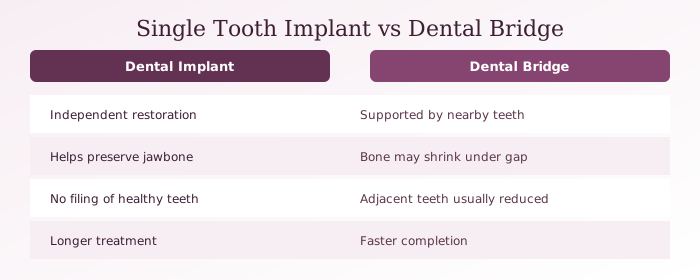
| Single Tooth Implant | Dental Bridge |
|---|---|
| Independent restoration | Supported by nearby teeth |
| Helps preserve jawbone | Bone beneath gap may shrink |
| No filing of healthy teeth | Adjacent teeth usually reduced |
| Longer treatment process | Faster completion |
| Often lasts longer | May require replacement earlier |
The right option depends on bone condition, nearby teeth, budget, and long-term expectations.
Recovery Is Usually More Boring Than Dramatic
People often expect implant recovery to feel intense. For most patients, it is actually slow and uneventful. The first two days are usually the most uncomfortable part. Mild swelling, tenderness while chewing, and stiffness around the gums are all common. Ice packs and soft food generally handle most of it.
After that, things improve fairly quickly on the surface. The strange part is that healing continues underneath for months even when the gums already look normal. Patients sometimes assume everything is fully healed because there is no pain anymore, but internally the bone is still adapting around the implant. That quiet healing phase is what determines long-term stability later.
Single Tooth Implant Cost India
Patients often ask for “the implant price” as if there is one fixed number for everyone. There usually is not. Two patients replacing the same tooth can still end up with completely different treatment plans.
Someone who lost a tooth recently may only need straightforward implant placement. Another patient who has had the gap for years may already have bone loss underneath the gums. In that situation, a bone graft for implant support may be needed before placement can happen safely.
The implant brand also changes pricing quite a bit. Some systems are more research-backed and cost more because of their design, surface technology, and long-term clinical data. Then there is the crown itself. Basic ceramic crowns usually cost less than zirconia crowns, which are stronger and often chosen for better aesthetics and durability.
In many clinics, the single tooth implant cost India may range anywhere between ₹25,000 and ₹80,000 or more depending on treatment complexity. That is why most clinics avoid giving exact implant estimates over the phone before scans and examination.
Single Dental Implant Gurgaon
Patients looking for a single dental implant Gurgaon treatment usually want something that feels natural and remains stable long term. Before planning treatment, dentists evaluate gum health, bone support, bite alignment, oral hygiene, and medical history.
Some patients lose teeth because of severe decay or gum disease. Others come in after accidents, fractures, or failed root canal treatment. Even patients with some degree of bone loss may still qualify for implants after grafting procedures. Smoking and uncontrolled diabetes are discussed carefully because both can affect healing around the implant.
Modern implant planning now relies heavily on digital scans and guided placement techniques, which help improve precision during surgery. At The Dental Roots, treatment planning focuses on long-term bone support, gum health, and bite stability rather than simply filling the visible gap.
How Long Does a Single Tooth Dental Implant Last?
Dental implants are designed for long-term function. With proper oral hygiene and regular dental care, many continue functioning well for decades. Their lifespan depends heavily on smoking habits, gum health, teeth grinding, oral hygiene, and regular maintenance visits.
The implant itself often lasts much longer than the crown attached above it. Over time, the visible crown may eventually need replacement because of normal wear.
Frequently Asked Questions
The Dental Roots Editorial Team
Written by our panel of specialist dentists & patient educators