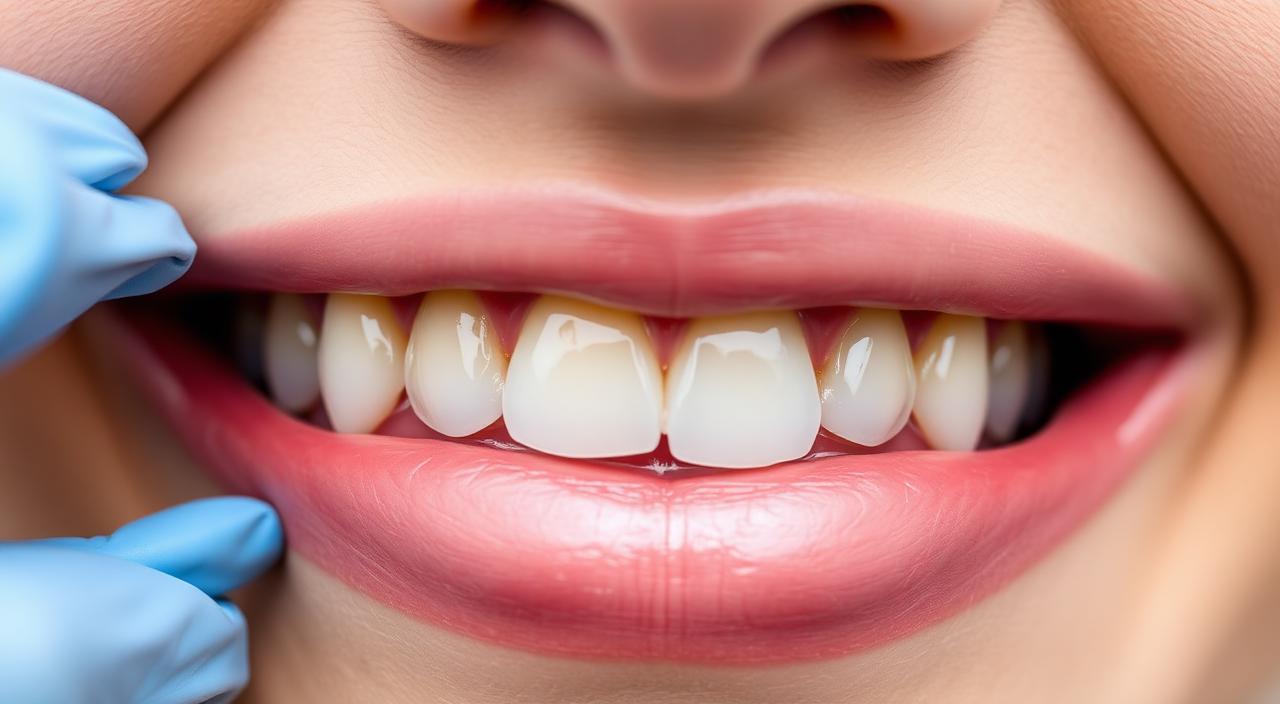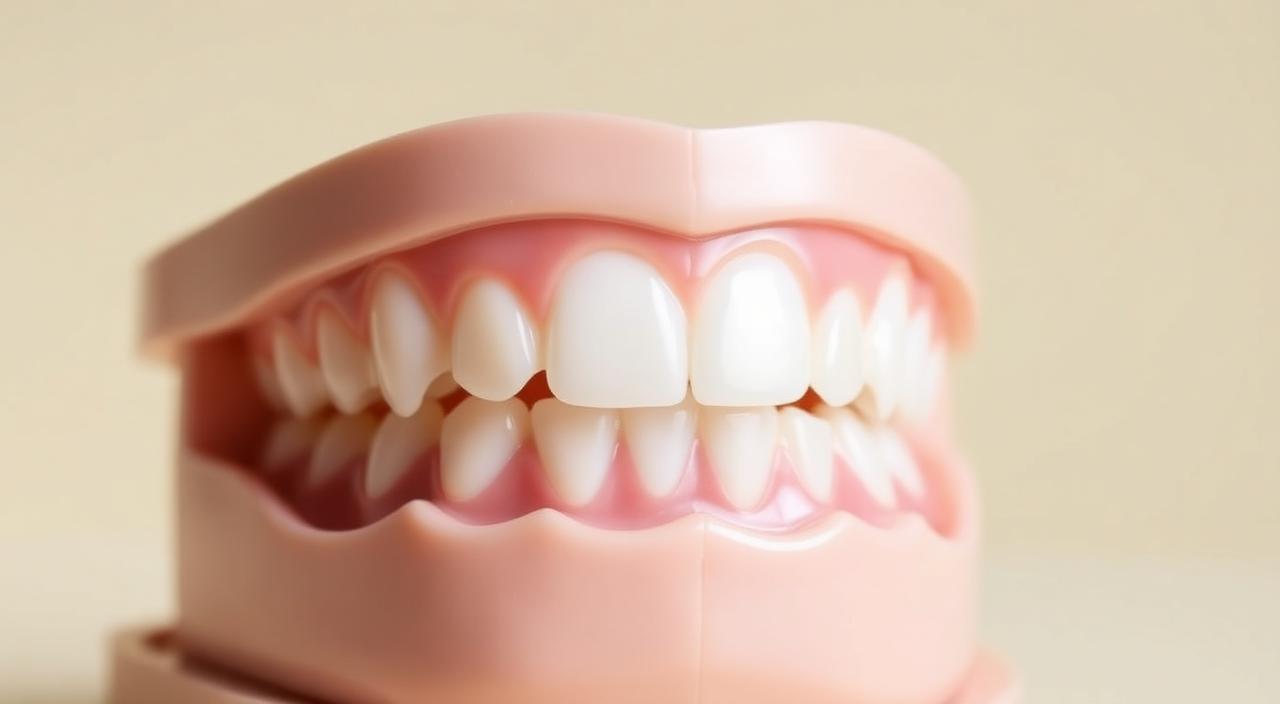
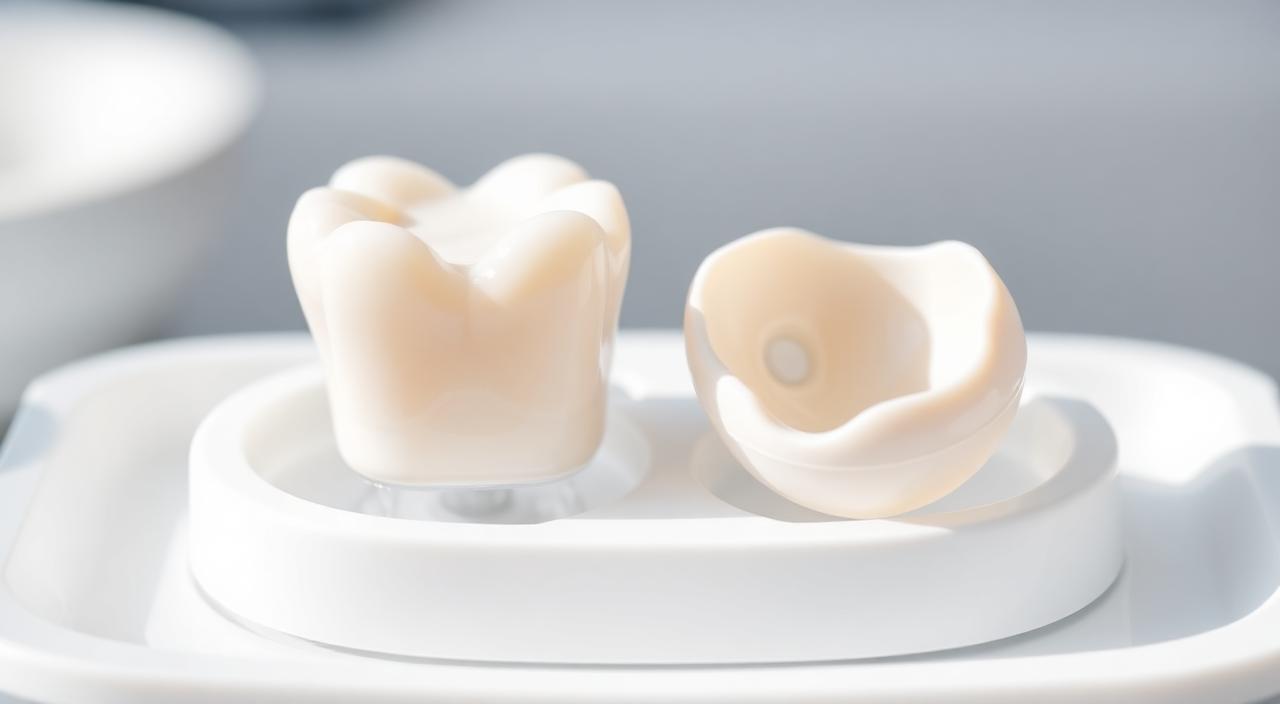
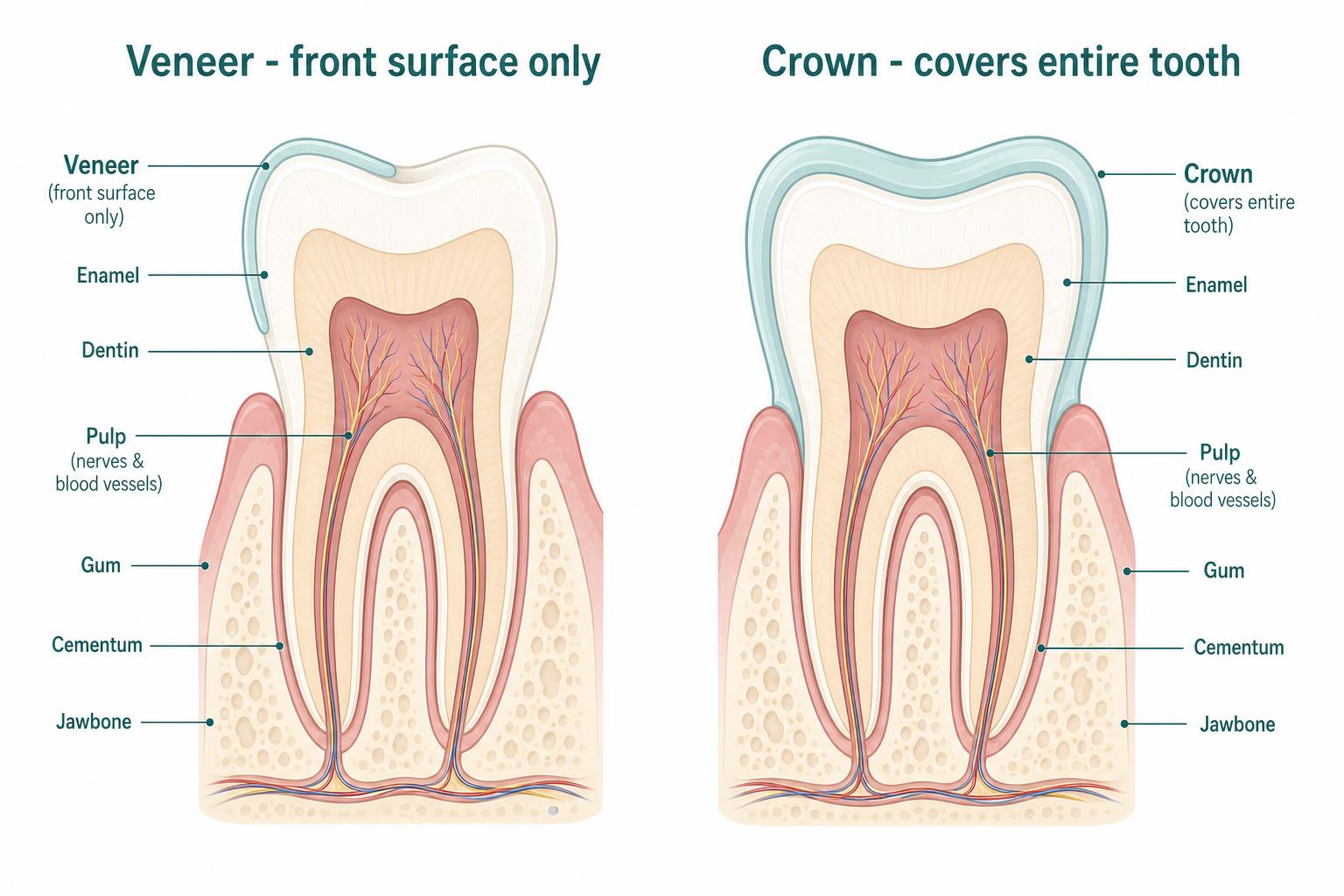
The most important distinction between a veneer and a crown comes down to how much of the tooth is covered. A veneer covers only the front surface. A crown encases the entire tooth — front, back, sides, and top. That difference in coverage reflects a fundamental difference in purpose: veneers are primarily cosmetic, while crowns are primarily restorative.
What a Dental Veneer Does
A veneer is a thin shell — typically porcelain or composite — bonded to the front face of a tooth. The natural tooth behind the veneer remains mostly intact. The procedure involves removing a small amount of enamel from the visible surface to create room for the veneer to sit flush.
Veneers are the right choice when the tooth is structurally sound and the concern is cosmetic — discoloration, a chip on the visible surface, a gap, or slight irregularity in shape. They preserve most of the natural tooth and, when well made, are very difficult to distinguish from the surrounding teeth.
What a Dental Crown Does
A crown — sometimes called a cap — covers the entire visible portion of the tooth above the gumline. To place one, significantly more tooth structure is removed compared to a veneer, because the crown needs to fit over the whole tooth rather than just the front surface.
Crowns are recommended when the tooth itself has a structural problem that needs addressing: severe decay, a large fracture, structural weakness after a root canal, or a tooth that has broken down to the point where there is not enough sound structure left for a veneer. A crown protects and holds together what remains of the tooth. It is a restorative solution first, with cosmetic benefits secondary.
Side-by-Side Comparison
| Factor | Veneer | Crown |
|---|---|---|
| Coverage | Front surface only | Entire tooth |
| Primary purpose | Cosmetic | Restorative |
| Tooth preparation | Minimal enamel removal | Significant tooth reduction |
| Suitable for damaged/decayed teeth | No | Yes |
| After root canal | Usually not recommended | Often recommended |
| Longevity | 10–15 years (porcelain) | 10–15 years (ceramic/zirconia) |
| Aesthetics (front teeth) | Excellent — very natural | Very good — slight margin possible |
| Enamel preservation | High | Low |
| Cost (Delhi NCR) | Moderate | Moderate to higher |
When a Dentist Recommends a Crown Instead of a Veneer
If a patient comes in with a cosmetic concern but the tooth has significant existing decay, a large old filling, or structural damage, a veneer will not address the underlying issue. Placing a veneer over a compromised tooth can allow decay to progress hidden underneath.
Root-treated teeth are a common example. After root canal treatment, a tooth loses moisture and can become brittle. It is also more likely to fracture under normal chewing pressure. A crown wraps around the entire tooth and protects it from this risk. A veneer, covering only the front surface, does not provide that protection.
The dentist will always assess the structural health of the tooth before recommending one or the other. If a tooth looks cosmetically problematic but is also structurally compromised, the safe and clinically appropriate choice is usually a crown.
Can I Get a Veneer on a Root-Canal-Treated Tooth?
Generally, this is not recommended. After root canal treatment, the internal structure of the tooth is altered and the risk of fracture increases. A veneer, which bonds to the front surface only, cannot prevent this. A crown, which encases the full tooth, can. Most dentists will recommend a crown after root canal treatment on a front tooth for exactly this reason.
Are Veneers Cheaper Than Crowns in Delhi?
The cost differential between veneers and crowns depends on the material chosen for each and the specific clinical situation. In general, porcelain veneers and ceramic or zirconia crowns are broadly comparable in cost. The difference in preparation and lab fabrication is similar.
What changes the cost calculation is the clinical picture. If a tooth needs significant preparation regardless — because of existing damage — then the additional cost of a crown over a veneer narrows further. Your dentist can give you an accurate picture of cost after assessing what the tooth actually needs.
If you have been told you need a crown but are wondering whether a veneer might be an option, or if you are simply trying to understand which treatment is right for a particular tooth, the team at The Dental Roots can assess your situation and give you a clear recommendation. The decision always comes down to the specific condition of the tooth — not a preference for one treatment over another.
Related reading
Frequently Asked Questions
The Dental Roots Editorial Team
Written by our panel of specialist dentists & patient educators